
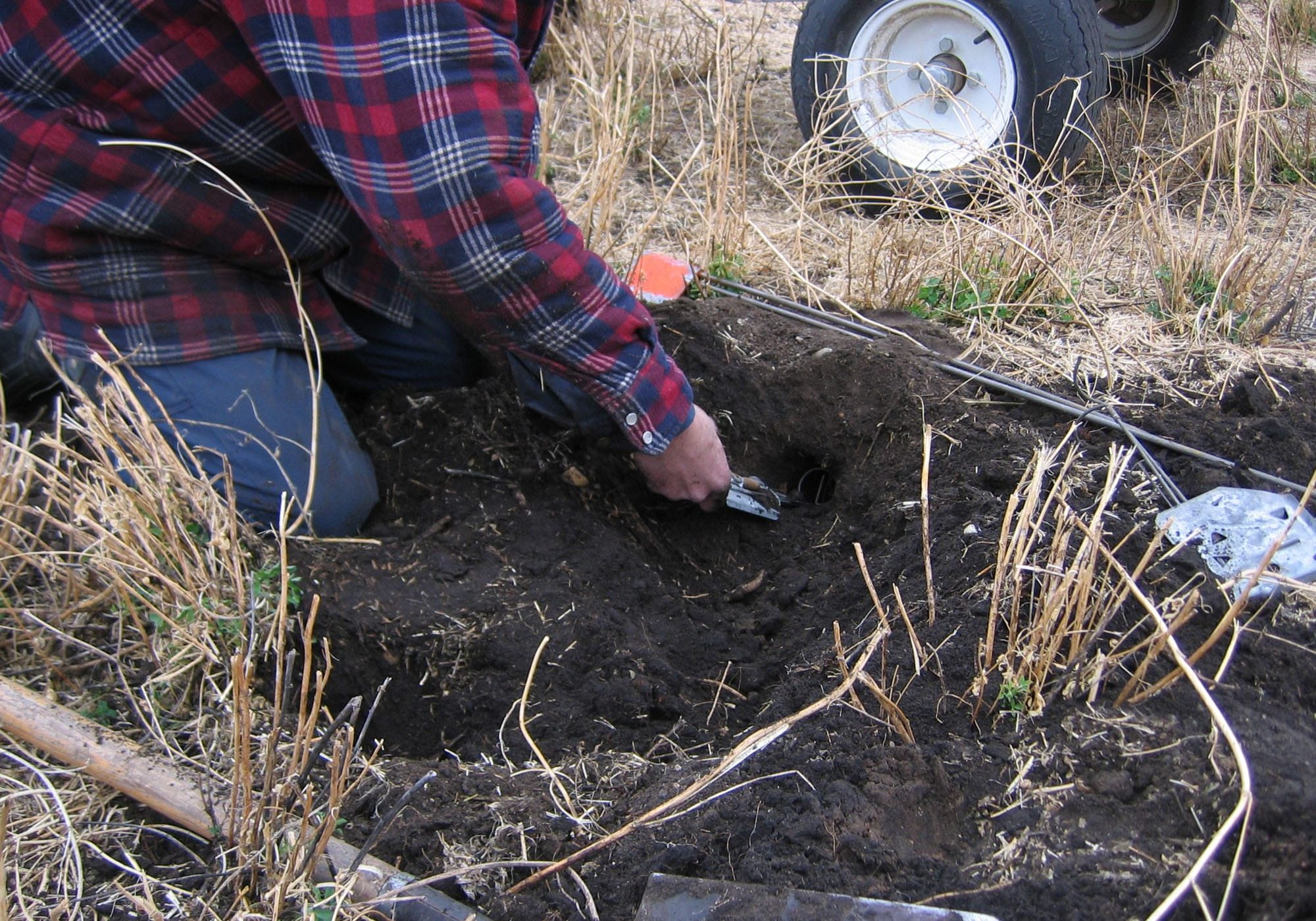
The Hidden Cost of Hand-Trapping Gophers Trapping gophers can work. The question is how much time you can afford to spend doing it.
Hand trapping pocket gophers has one big advantage: when there’s a gopher in the trap, you know you got it.
That certainty is why trapping has been part of pocket gopher control on farms for generations. For a few active animals, it can still be one of the simplest ways to handle the problem.
The cost starts showing up when trapping stops being a small job.
Every active gopher has to be found. Every trap has to be set. Then somebody has to come back, check it, reset it if necessary and keep working through new activity as it appears.
The trap itself may be inexpensive. The time required to keep trapping is where the real cost lives.
Hand trapping pocket gophers is a one-animal-at-a-time job
Pocket gophers spend nearly all their time underground, so trapping starts with finding where an animal is actively working.
That usually means working through the same basic process again and again:
- Find fresh gopher activity
- Locate the active tunnel
- Open and prepare the trap site
- Set and mark the trap
- Return to check it
- Reset traps that haven’t produced
- Remove successful sets
- Move on to the next active area
None of those steps is especially complicated. The problem is repetition.
If you have a handful of active gophers, that amount of work may be completely reasonable. When fresh mounds keep appearing across multiple areas, though, each new gopher adds another set, another check and another trip back through the field.
“My dad’s old theory was if you trap them, you know they’re dead. But you could go out there with 100 traps on ten acres and stay there for days and weeks.”
— Ed Chvatal, hay farmer
That’s the tradeoff with trapping in a nutshell. It gives you certainty on an individual animal, but getting that certainty across persistent gopher pressure takes labor.
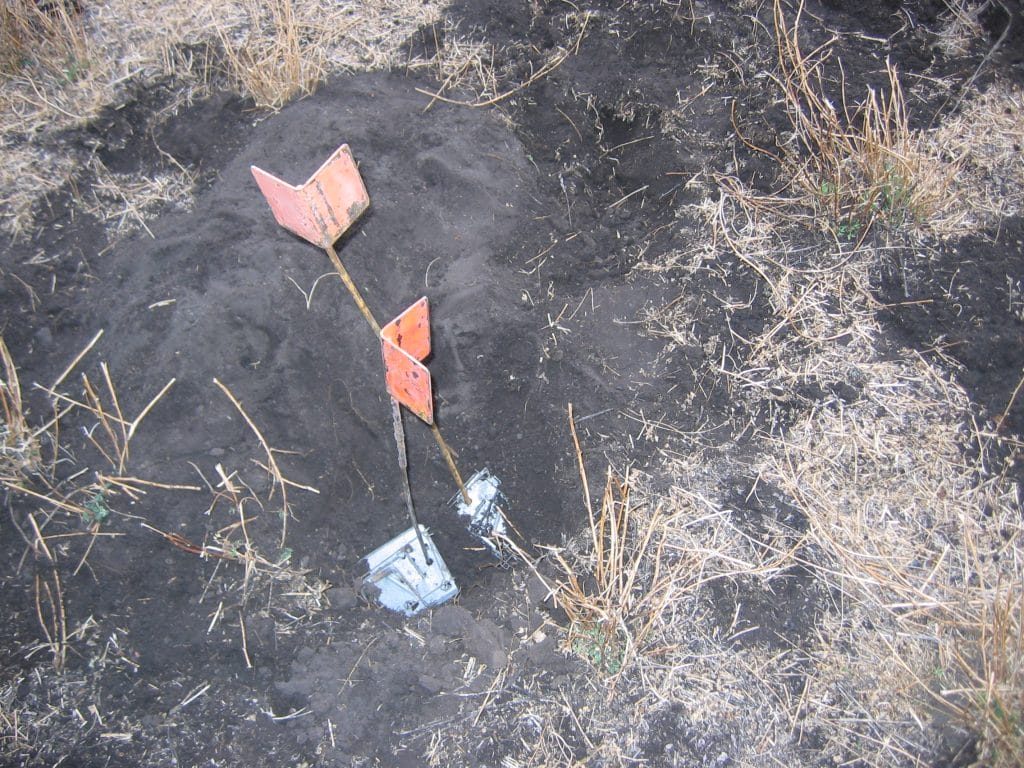
The labor cost of trapping gophers keeps repeating
The hidden cost of trapping isn’t just the first afternoon somebody spends setting traps.
It’s the return trips.
A trap has to be checked. An empty trap may need to be reset. New mounds have to be investigated. Another active gopher may show up after you thought an area was cleaned up.
Over a season, trapping can turn into a recurring job that never looks especially large on any one day.
The biggest cost may be the work that isn’t getting done
Pocket gopher trapping doesn’t happen in a vacuum.
The same people checking traps may also be responsible for irrigation, equipment maintenance, field work, harvest preparation and everything else that has to happen on schedule.
That’s where the cost becomes harder to see.
A couple of hours trapping doesn’t necessarily feel expensive. But if those couple of hours happen repeatedly, the real question becomes what else could that person have been doing?
For a working farm, hand trapping has to compete with jobs that often have much less flexibility:
- Irrigation schedules
- Equipment repairs and maintenance
- Cutting and harvest preparation
- Field scouting
- Moving equipment
- Other pest and crop problems
- Work that has to happen before weather or crop conditions change
Gophers, unfortunately, don’t care what else is on the list.
That’s why the labor calculation starts changing even before you reach a huge number of acres. A relatively small problem can consume plenty of time if the activity is persistent and somebody has to keep going back to it.
Pocket gopher trapping gets harder to justify as activity spreads
There’s no acreage number where trapping suddenly stops making sense.
The better measure is how much active pressure and repeat labor you’re dealing with.
A few gophers confined to one area may be worth trapping individually. But consider what happens when:
- Fresh mounds are appearing in several parts of the farm
- The same areas keep becoming active again
- Someone is checking traps day after day
- New gophers show up before the last round is finished
- Gopher work is consistently pulling labor away from other jobs
That’s the kind of cost that doesn’t show up when you compare the purchase price of a trap with another control method. The equipment may be cheap while the process around it consumes months of repeated labor.
Hand trapping still has a place in pocket gopher control
None of this means trapping is a bad way to kill a pocket gopher.
It can be exactly the right tool when:
- You have a small number of isolated animals
- Fresh activity is easy to pinpoint
- You need targeted control in an area equipment can’t reach
- You’re cleaning up a few remaining problem spots
- You have the time to check traps consistently
That last point matters. Trapping works best when somebody can actually stay on top of it.
The mistake is assuming that because trapping works on one gopher, it must also be the best way to manage every gopher problem on the farm.
As the amount of hand work increases, it makes sense to compare trapping with control methods that let one operator cover ground differently.
When to consider moving beyond hand trapping gophers
You don’t need to wait until trapping becomes impossible.
A better time to reconsider your control method is when the labor involved starts becoming disproportionate to the job.
Ask:
- How often is someone checking gopher traps?
- Are we working the same areas repeatedly?
- Is fresh activity appearing faster than we can trap it?
- Are other farm jobs being delayed to keep up with gophers?
- Do we want to continue finding and treating individual natural tunnels?
- Would tractor-applied control fit the way we want to manage the problem better?
The answer may still be trapping. It may be baiting. It may be fumigation. Many farms use more than one approach depending on where gophers are active.
The point is to include labor and repeat trips in the decision, rather than comparing methods only by whether they can kill an individual gopher.
Reducing hand labor in pocket gopher control
Gopher General came out of the same problem farmers run into with trapping and hand treatment: controlling pocket gophers one burrow at a time takes a lot of hands-on work.
Instead of locating each natural tunnel, Gopher General is pulled behind the tractor and creates an underground treatment tunnel as it moves through the field. Slow-release fumigant is metered into that tunnel, allowing the operator to treat pocket gophers without probing, setting and checking individual traps.
That changes the labor involved even when the area being treated isn’t particularly large.
The reason to consider tractor-applied control isn’t simply that you farm a certain number of acres. It may be that:
- You want to reduce time spent on foot treating individual gophers
- Gopher activity keeps returning
- Labor is difficult to spare
- You want one operator handling more of the treatment from the tractor
- Trapping remains useful for cleanup, but you don’t want it carrying the whole control program
Gopher General doesn’t make trapping obsolete. There are still situations where setting a trap is the easiest answer.
It gives farmers another option when the hidden cost of trapping has become the time it takes to keep doing it.